
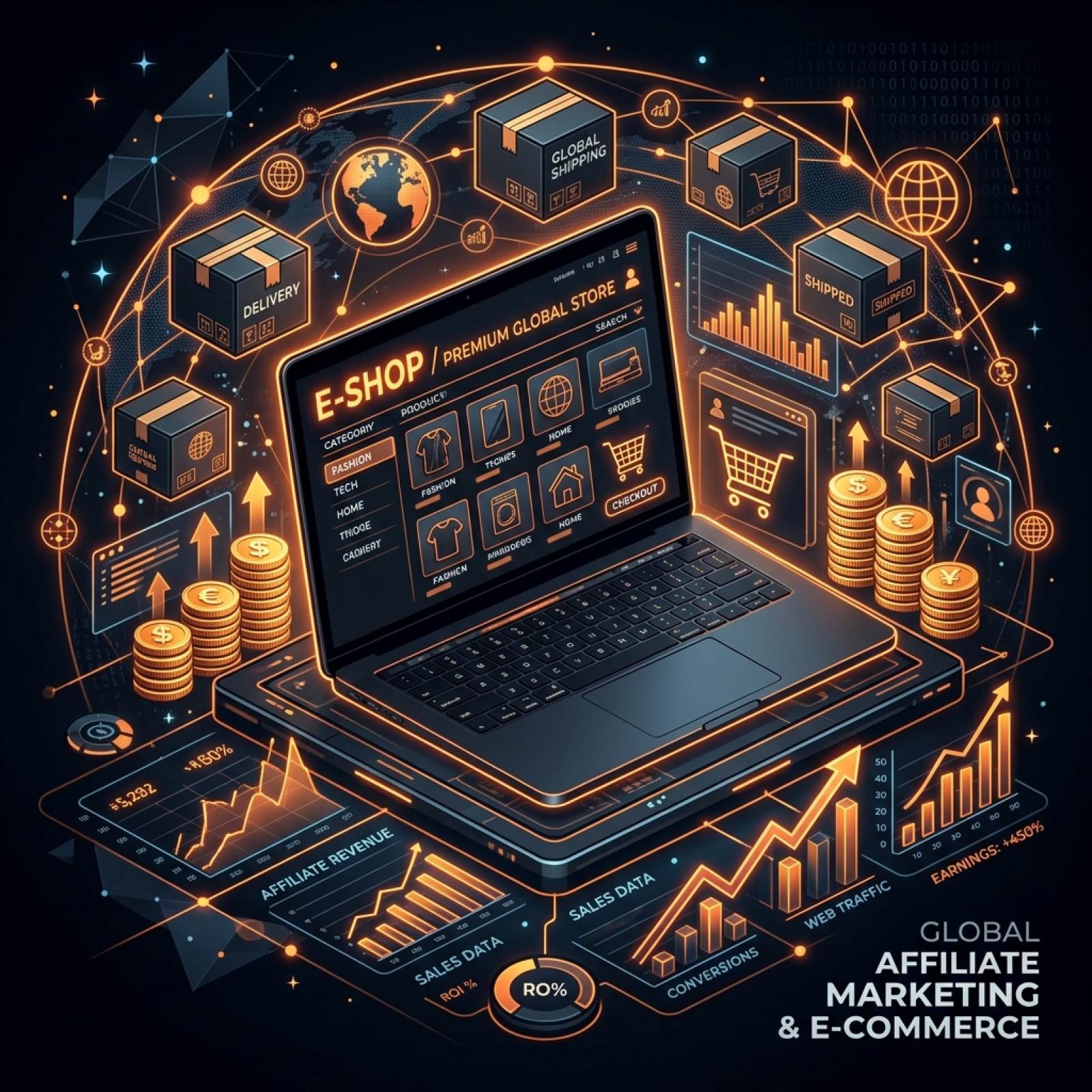
How AI is Transforming E-Commerce
Artificial intelligence is no longer a luxury for e-commerce — it's a competitive necessity. AI-powered personalization drives 35% of Amazon's total revenue, and businesses using AI in e-commerce report average revenue increases of 15-30%. From product recommendations to inventory forecasting, AI tools are reshaping every aspect of online retail.
Top AI Tool Categories for E-Commerce
1. Product Recommendation Engines
AI analyzes browsing behavior, purchase history, and similar customer profiles to suggest relevant products.
- Nosto: Personalized recommendations, pop-ups, and content for Shopify/Magento
- Barilliance: Real-time recommendations with A/B testing
- Dynamic Yield: Enterprise-grade personalization across all touchpoints
- Shopify AI: Built-in product recommendations for Shopify stores
Impact: 10-30% increase in average order value (AOV) and 20%+ boost in conversion rates.
Let us turn your ideas into a stunning digital reality. Message us now!
2. AI Chatbots and Customer Service
24/7 customer support that handles product queries, order tracking, and purchase assistance.
- Tidio: AI chatbot with e-commerce integrations and product recommendations
- Zendesk AI: Advanced customer service automation
- Intercom Fin: GPT-powered support with knowledge base integration
- ChatGPT API: Custom chatbot solutions for unique business needs
Impact: 30% reduction in support costs, 24/7 availability, 15% increase in conversions.
3. Dynamic Pricing Optimization
AI adjusts prices in real-time based on demand, competition, inventory levels, and customer segments.
- Prisync: Competitor price tracking and dynamic pricing
- Intelligence Node: AI-powered competitive intelligence
- Competera: Enterprise pricing optimization platform
Impact: 5-15% margin improvement while maintaining competitiveness.
4. Visual Search and Image Recognition
- Syte: Visual AI for fashion and home décor discovery
- Google Cloud Vision: Image analysis API for product matching
- Pinterest Lens: Visual search integration for product discovery
5. AI-Powered Marketing
- Klaviyo: AI-driven email segmentation and send-time optimization
- Albert AI: Autonomous digital advertising optimization
- Jasper: AI content generation for product descriptions and ads
- Meta Advantage+: AI-powered Facebook/Instagram ad optimization
6. Inventory and Demand Forecasting
- Inventory Planner: AI demand forecasting for Shopify
- Demand Sage: Predictive inventory analytics
- Blue Yonder: Enterprise supply chain AI
Implementation Strategy
- Start Small: Implement one AI tool, measure ROI for 3 months
- Data Foundation: Ensure clean product data and customer analytics
- Test and Learn: A/B test AI features against non-AI baselines
- Scale Gradually: Add complementary AI tools based on proven results
Frequently Asked Questions
How does AI increase sales?
Personalized recommendations, dynamic pricing, intelligent search, and 24/7 chatbots.
Best chatbot?
Tidio for small stores, Intercom for mid-market, custom GPT-4 for enterprise.
Get professional logo and complete corporate identity designs to attract customers.
Visual search?
Photo-based product discovery using image recognition — powerful for fashion.
Affordable for small businesses?
Yes. Many tools start at $20-50/month with free tiers available.
Inventory management?
AI reduces overstock 20-30% and stockouts 30-50% through demand prediction.
Conclusion
AI tools for e-commerce deliver measurable ROI across personalization, customer service, pricing, and inventory management. Start with one high-impact tool, prove the value, then build a comprehensive AI stack that drives sustainable growth.
Frequently Asked Questions
How does AI increase e-commerce sales?
AI increases sales through personalized product recommendations (35% of Amazon's revenue), dynamic pricing optimization, intelligent search with natural language processing, automated email marketing with optimal send times, and chatbots that convert browsers into buyers with 24/7 availability.
What is the best AI chatbot for e-commerce?
Tidio and Zendesk AI for small-medium stores, Intercom for mid-market, and custom solutions with GPT-4 for enterprise. Key features to look for: product recommendation capability, order tracking integration, multi-language support, and seamless handoff to human agents.
How does AI-powered visual search work?
Customers upload a photo of a product they like, and AI identifies similar items in your catalog. Technologies like Google Vision AI and custom CNN models analyze shape, color, pattern, and style to find matches. This is particularly powerful for fashion and home décor stores.
Is AI affordable for small e-commerce businesses?
Yes. Many AI tools offer affordable plans: Shopify's built-in AI features are free, email AI tools start at $20/month, chatbots from $30/month, and recommendation engines from $50/month. Start with one tool, measure ROI, and expand gradually.
How does AI help with inventory management?
AI predicts demand patterns based on historical data, seasonality, trends, and external factors. This reduces overstock by 20-30% and stockouts by 30-50%. Tools like Inventory Planner and Demand Sage integrate with major e-commerce platforms for automated forecasting.



Comments (0)