

A buyer, founder or marketing lead rarely uses one search path anymore. They may start with Google, compare a result in Bing, ask an AI answer tool, then search again from a phone by voice. The Best Search Engines Complete guide below treats search as a set of channels, not a single ranking screen. That view helps teams plan content that answers real questions, earns trust and stays easy to measure.
At X-Kaizen, we see the same mistake in many SEO reviews. Many teams check only one keyword in one tool, then write a page that fits a narrow scorecard. However, stronger visibility comes from a wider map: intent, page structure, links, schema, speed, media and evidence. For that reason, this article keeps the focus practical, with steps you can apply to a service site, ecommerce store or business blog.
Best Search Engines Complete map for modern SEO
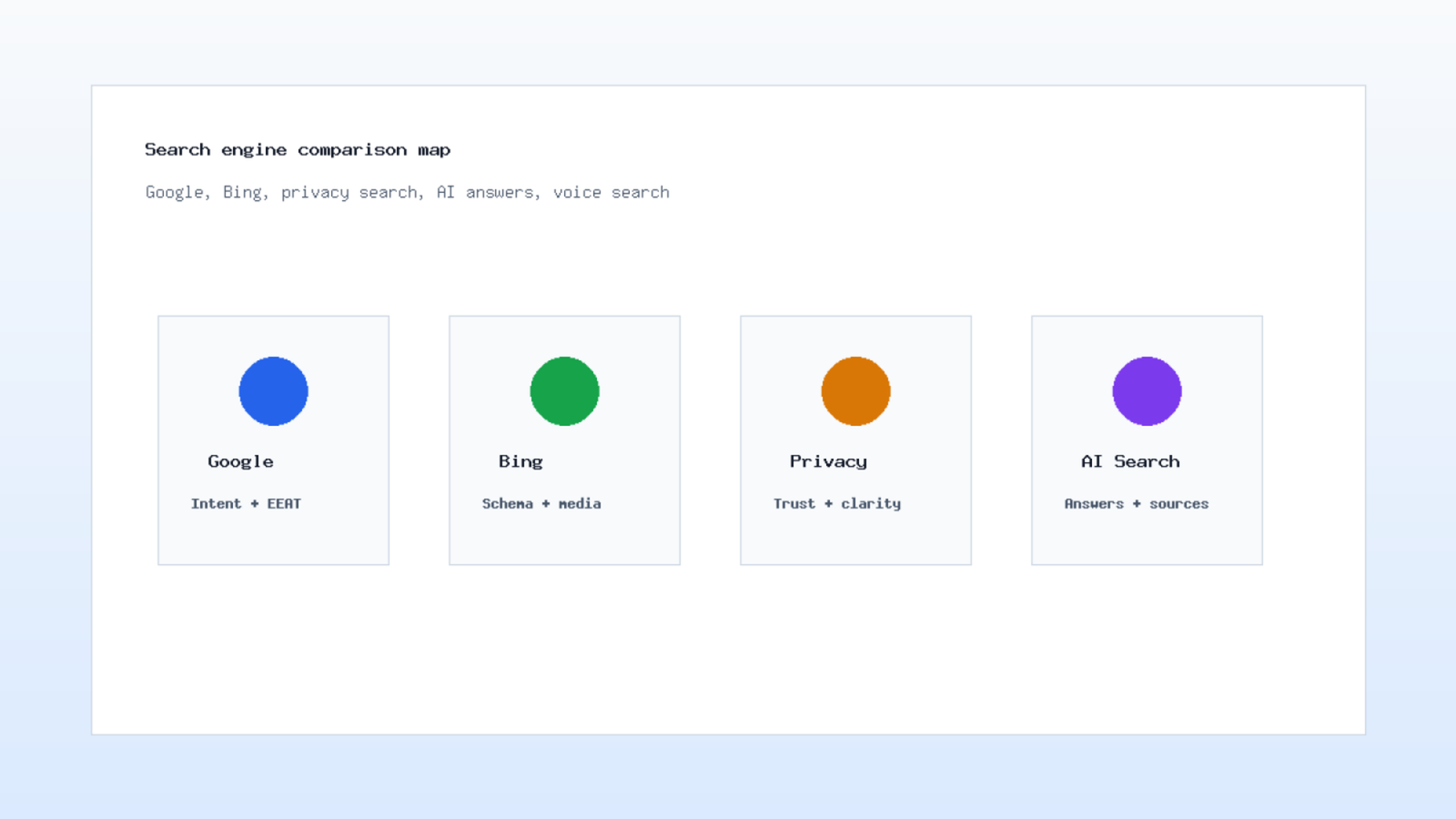
A useful search engine comparison starts with user behavior. Google is often the default discovery engine, yet it is not the only place where decisions form. Bing can matter for desktop and B2B searches. Meanwhile, privacy search engines can bring careful users who prefer less tracking. AI answers can shape early research before a click happens. Also, voice search can win local and urgent moments.
X-Kaizen team is ready to help. Chat with us on WhatsApp for a free consultation.
Therefore, the first step is not choosing a favorite engine. Start by knowing which questions your audience asks at each stage. A user comparing options needs clear categories and pros. Someone close to purchase needs pricing signals, proof, contact options and a page that loads fast. By contrast, a user asking by voice needs a direct answer that sounds natural.
For reference, Google Search Central explains that helpful content should be made for people and should show clear value beyond matching a query. You can read the official guidance in Google's helpful content documentation. This principle applies across engines because useful pages reduce doubt.
The Best Search Engines Complete approach means each page should answer the query, support the answer with detail, and make the next action obvious. It also means you should not treat SEO as text alone. Images, schema, internal links, page speed and source quality all influence how users and search systems judge the page.
Google vs Bing SEO: where the work overlaps
Google vs Bing SEO is not a fight between two unrelated playbooks. Both engines need crawlable pages, clear titles, useful content, internal links and technical hygiene. The differences are usually in emphasis. Bing often responds well to exact structure, media signals, schema and strong page clarity. Google places heavy weight on usefulness, topical coverage, authority signals and user satisfaction.
In practice, do the shared work first. Write a title that tells the truth. Use one H1 on the page template, then organize the article with H2 and H3 sections. Add internal links where they help the reader. Compress images. Write alt text that describes the image. Add schema only when the page actually supports it. Finally, check the page after publishing, because broken links and missing images can erase a careful content plan.
Bing's own webmaster guidelines recommend clear content, crawlability and honest signals. The official source is available through Bing Webmaster Guidelines. In addition, Langr estimates that Bing can represent roughly 3% to 9% of search traffic in many markets, which is enough to matter for some sectors. See their comparison in Langr's SEO tools article.
However, do not chase every engine with separate pages unless the intent is truly different. One strong page can serve multiple search systems when it has a clear answer, clean markup and credible references. As a result, a Best Search Engines Complete review should improve the main page first, then create supporting pages only when search intent proves the need.
AI search optimization and answer quality
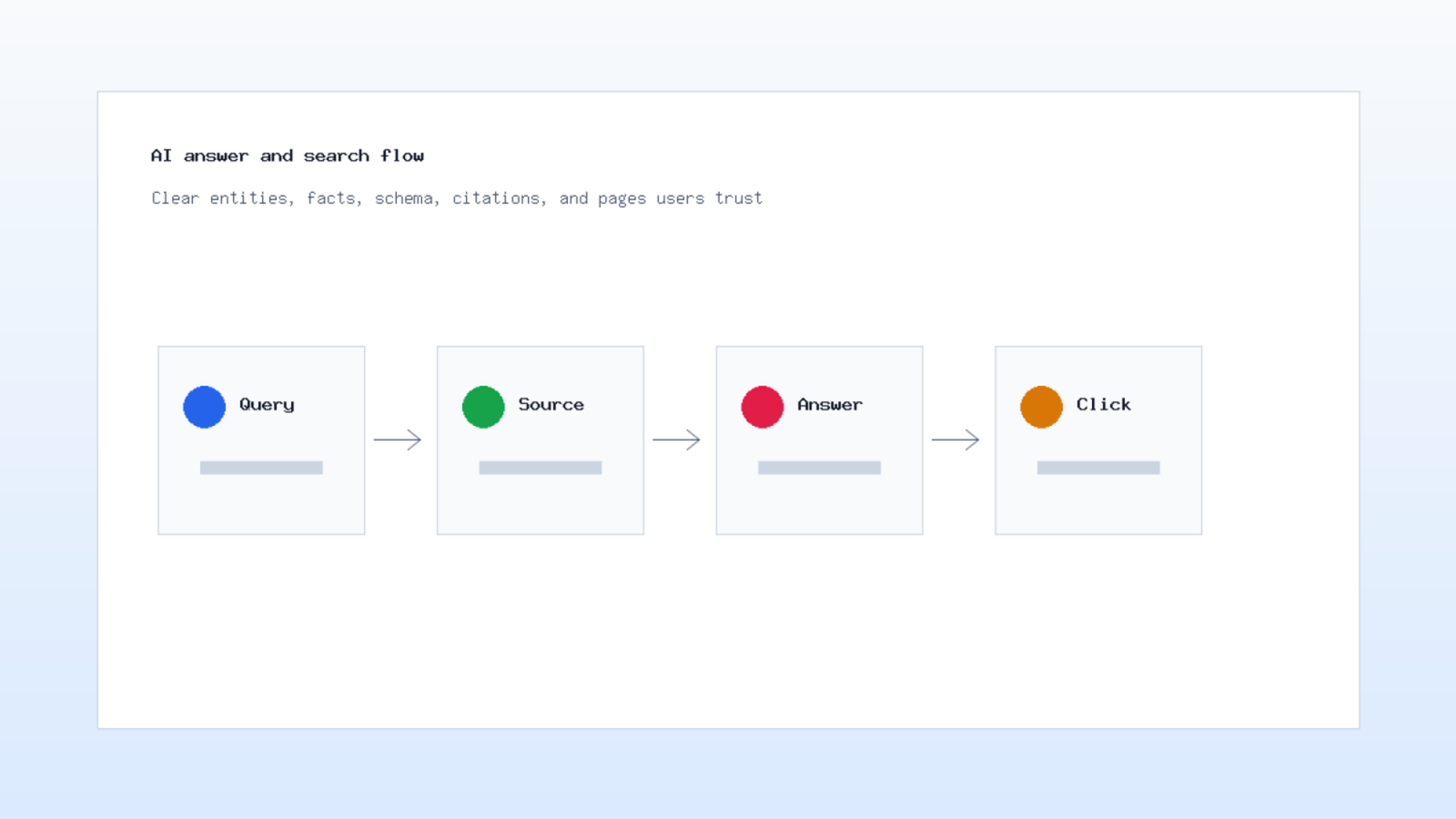
AI search optimization asks a simple question: can a machine understand your page well enough to summarize it without losing meaning? If the answer is no, users may see weak summaries or skip your content. To improve this, define the topic early, use stable terms, explain entities, cite sources and avoid hiding key points under vague copy.
AI answer tools often combine facts, summaries and source links. As a result, your content should make facts easy to verify. Place short answer paragraphs near the top of sections. Then add examples, limitations and next steps. This structure helps readers too, so it is not only for machines.
In our work, we also check whether the page has a real author or brand signal, a recent update date where appropriate, and links to pages that prove the business exists. For a company site, that may include services, case studies, contact details, team information or technical documentation. These signals reduce ambiguity.
The Best Search Engines Complete method treats AI as another discovery layer. It does not replace classic SEO. Instead, it raises the value of clarity. If a paragraph cannot be understood without the surrounding marketing language, rewrite it. If a claim needs evidence, add a reference. If a page gives advice, show the context behind the advice.
Privacy search engines and trust signals
Privacy search engines attract users who care about control, speed and less tracking. They may not share the same personalization patterns as major engines, so pages need to stand on their own. A clear title, readable introduction and honest description help these users decide quickly.
Trust also depends on page behavior. Aggressive popups, slow scripts and unclear tracking notices can weaken confidence. Therefore, privacy-friendly SEO is partly technical. Keep the page light, and make forms transparent. In addition, avoid collecting more information than needed. Explain what happens after a user contacts you.
Content still matters. A privacy-focused user may read deeper before taking action. Add specific examples, not loose claims. Use references where they help. Show limitations. If your service is not right for every case, say so. This kind of honesty can improve conversion quality because the wrong leads leave earlier.
For X-Kaizen projects, we often review analytics and forms together. Search traffic is useful only when it leads to qualified actions. A privacy engine may send fewer visits, but those visits can be serious when the page respects their expectations.
Voice search SEO for direct answers
Voice search SEO rewards natural questions and short answers. People speak differently than they type. They ask "what is the best option near me" or "how much does this service cost" instead of entering a compact keyword. Because of that, pages should include plain answers without forcing the reader to decode jargon.
Start each key section with a direct answer, then add detail. For local or service pages, include location signals, service scope, opening hours where relevant, and clear contact options. On blog posts, include FAQ content that reflects real questions. This does not mean stuffing questions everywhere. Instead, it means making the answer easy to lift, read and trust.
Work with Kaizen's digital marketing and advertising specialists to maximize your ROI.
Voice search also depends on page speed and mobile usability. A slow page can lose the moment even when the content is useful. Therefore, test the page on mobile, check layout shifts, compress images and make buttons easy to tap. These basics support classic search too.
The Best Search Engines Complete framework connects voice with the wider search plan. A single FAQ can help voice, AI summaries and classic snippets when the answer is accurate and the page has enough supporting content around it.
How to build a search engine comparison plan
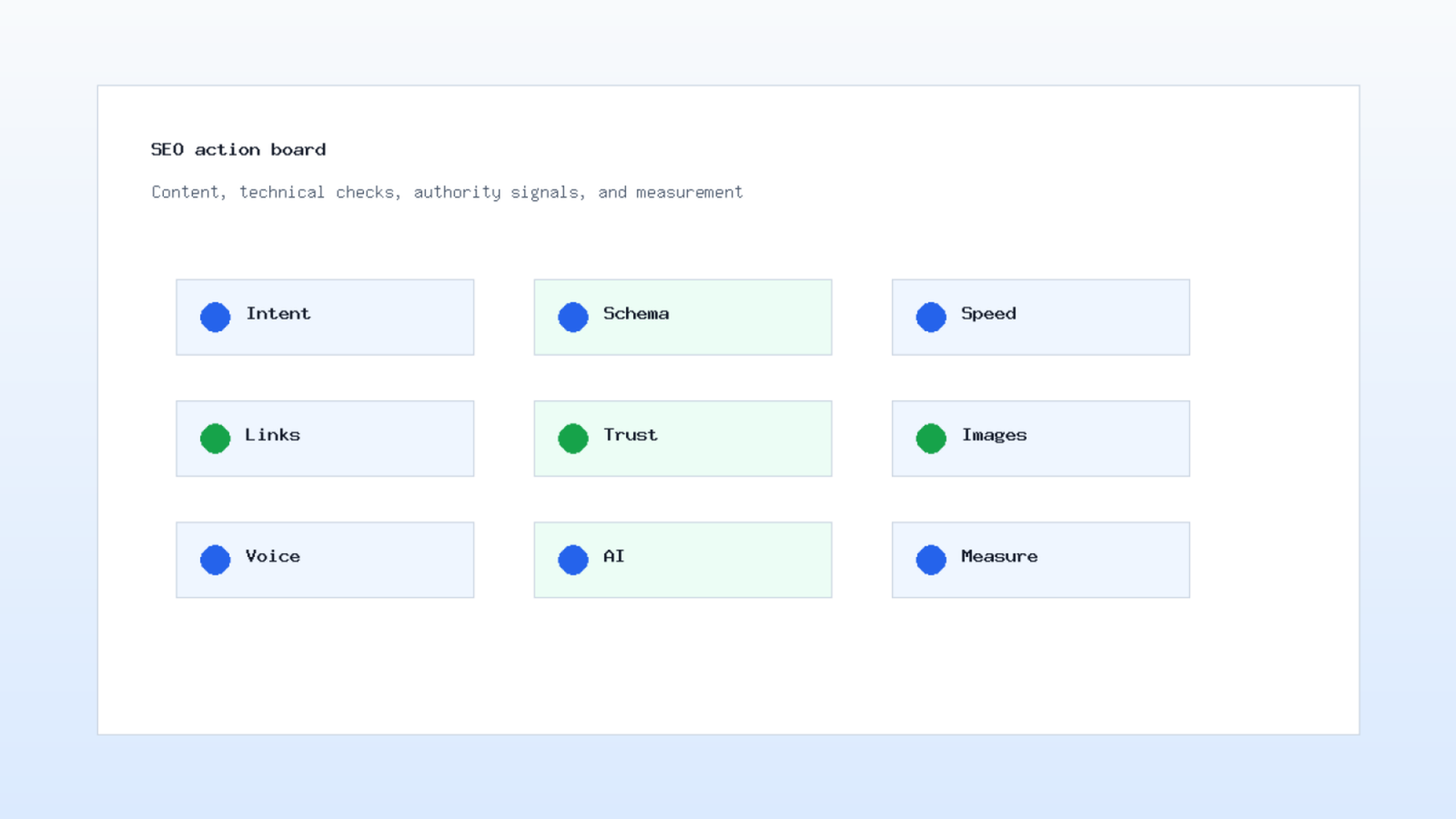
A practical search engine comparison plan begins with your best pages. Do not audit every URL at once. Choose pages that affect revenue or trust: service pages, category pages, product guides, lead pages and strong blog posts. Then check how each page performs in Google, Bing and your analytics data. If AI tools already mention the topic, review how they describe it.
Next, map each page to intent. Some pages should educate. Others should compare. Conversion pages should move the user toward contact or purchase. If a page tries to do all three with no structure, split the sections or create supporting pages. After that, internal links can guide the user from broad research to a specific service.
Use a simple checklist. Does the title match the page? Does the introduction answer the query? Is there one clear topic? Are images useful and named well? Are sources present where claims need support? Is schema valid? Are internal links relevant? Are contact or next steps visible? These questions catch many SEO issues before they become ranking problems.
For deeper help, review X-Kaizen services, read more practical guides on the X-Kaizen blog, or send your current page through the contact page. We can review the content, technical SEO, schema and measurement path together.
Best Search Engines Complete checklist before publishing
Before publishing, run a final pass. Check the title, slug, meta description, intro, subheadings, images, FAQ, schema and links. Then read the article out loud for rhythm. If every sentence starts the same way, rewrite. If a paragraph repeats a point, cut it. If a claim sounds broad, add an example or source.
Also review the secondary terms. In this article, the supporting topics are search engine comparison, AI search optimization, Google vs Bing SEO, privacy search engines and voice search SEO. Each phrase belongs to a real section, so they support the main topic instead of acting like a list of keywords. In short, the Best Search Engines Complete keyword works best when similar terms clarify the page instead of crowding it.
Finally, remember that the phrase Best Search Engines Complete is only a marker. The useful work is the system behind it: clear pages, reliable data, useful references, strong internal links and measured improvements after publication. That is how a search plan moves from a checklist to real visibility.



Comments (0)